
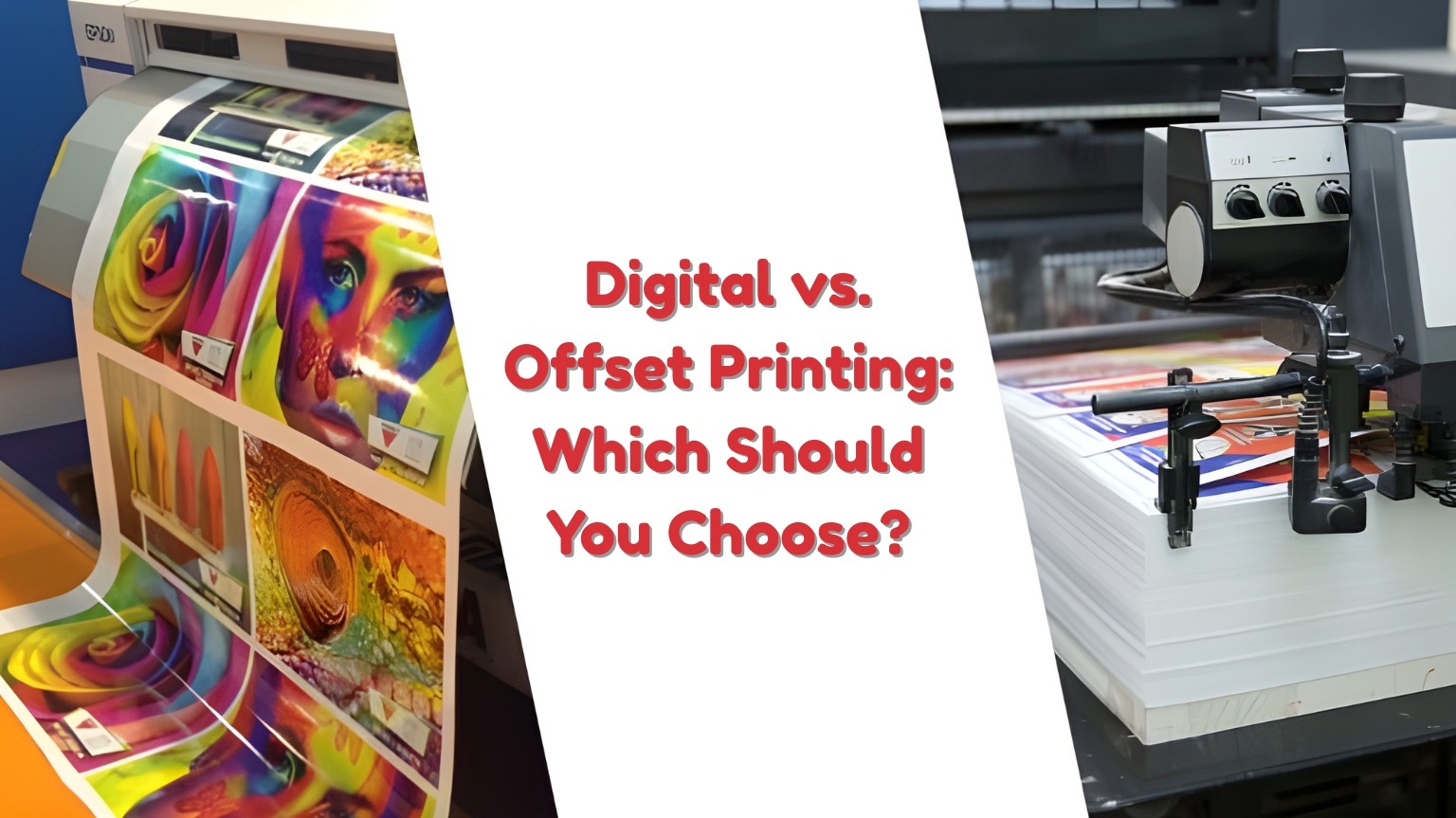
Digital Printing vs. Offset Printing: Which One Should You Choose?
When it comes to professional printing, one common question businesses face is, “Digital Printing vs. Offset Printing—Which is better?” Whether you’re printing brochures, business cards, catalogs, packaging, or marketing materials, choosing the right printing method can impact your budget, turnaround time, and final output quality.
Both methods have their strengths and ideal use cases. Understanding the difference between digital and offset printing will help you make a smarter decision based on your project needs.
Let’s break it down clearly and practically.
What is digital printing?
Digital printing is a modern printing method that prints directly from a digital file (like a PDF or design software) onto paper or other materials. It does not require printing plates.
This method works similarly to a high-end office printer but on a much larger, commercial scale.
Key Features of Digital Printing:
- No printing plates required
- Faster setup time
- Ideal for short runs
- Cost-effective for small quantities
- Allows customization (variable data printing)
Digital printing is widely used for business cards, flyers, personalized mailers, and small batch marketing materials.
What is Offset Printing?
Offset printing is a traditional printing method that uses metal plates to transfer an image from a rubber blanket onto paper. The process involves more setup time but delivers consistent, high-quality results, especially in large volumes.
Key Features of Offset Printing:
- Uses printing plates
- Excellent color accuracy
- High-quality image detail
- More cost-effective for bulk printing
- Suitable for large-scale commercial projects
Offset printing is commonly used for magazines, newspapers, packaging, books, and large-volume marketing materials.
Digital Printing vs. Offset Printing: Key Differences
Here’s a side-by-side comparison to help you choose.
1. Cost Comparison
Digital Printing:
More affordable for small quantities. Since there are no plates involved, setup costs are minimal.
Offset Printing:
Higher initial setup cost due to plate creation. However, the per-unit cost decreases significantly for large print runs.
👉 If you’re printing under 500 copies, digital printing is usually more cost-effective.
👉 For thousands of copies, offset printing becomes cheaper per unit.
2. Print Quality
Digital Printing:
Produces excellent quality for most business needs. However, color matching may vary slightly between runs.
Offset Printing:
Superior color accuracy and consistency. It uses Pantone matching systems, making it ideal for brand-sensitive projects.
If color precision and fine detail are critical, offset printing often has the edge.
3. Turnaround Time
Digital Printing:
Faster production time. Since there’s no plate setup, printing can start immediately.
Offset Printing:
Requires setup time for plate creation and machine calibration.
If you need urgent printing, digital printing is usually the better choice.
4. Volume Flexibility
Digital Printing:
Best for short runs and customized materials.
Offset Printing:
Designed for high-volume production.
If you need personalized names or unique codes on each print, digital printing supports variable data easily.
5. Material & Finishing Options
Digital Printing:
Limited paper types compared to offset (though improving rapidly).
Offset Printing:
Supports a wider variety of paper types, textures, special inks, coatings, and finishing options.
For premium packaging or luxury print projects, offset printing offers more flexibility.
When Should You Choose Digital Printing?
Choose offset printing if:
- You need large volumes
- Color consistency is crucial.
- You want premium paper or special finishes.
- You’re printing magazines, catalogs, or packaging.
- You need a lower per-unit cost in bulk.
Offset printing is ideal for established businesses and high-volume commercial printing.
Digital Printing vs. Offset Printing: Which One is Right for You?
The answer depends on three major factors:
Quantity
Small runs → Digital
Large runs → Offset
Budget
Limited budget & small job → Digital
Bulk production budget → Offset
Timeline
Urgent job → Digital
Planned large campaign → Offset
Instead of asking which is better overall, ask which is better for your specific project.
Cost Example Scenario
Let’s say you need 100 brochures for a meeting next week. Digital printing will likely be faster and more economical.
Now imagine you need 10,000 brochures for a nationwide campaign. Offset printing would significantly reduce your per-piece cost.
Understanding this difference can save you money and improve efficiency.
Environmental Considerations
Modern digital printing produces less waste for small jobs because it doesn’t require plates or a lengthy setup.
Offset printing, however, becomes more environmentally efficient in large volumes due to reduced per-unit waste.
Both technologies have improved significantly in sustainability.
Conclusion
Choosing between digital printing and offset printing doesn’t have to be confusing. Each method serves a purpose, and the right decision depends on your project size, budget, and timeline. If you need speed, flexibility, and lower setup costs, digital printing is your best option. If you require premium quality, color precision, and bulk production at a lower per-unit cost, offset printing is the smarter investment.
Ans. Garment hang tag printing is the process of designing and producing custom tags attached to clothing items to display branding, pricing, and product information.
Ans. Thick cardstock, textured paper, cotton paper, and recycled materials are popular choices for high-end brands.
Ans. Yes. Premium finishes and thoughtful design significantly enhance perceived product value and brand image.
Ans. Modern sustainable materials are both durable and environmentally responsible, making them ideal for premium brands.
Ans. Foil stamping, embossing, letterpress, and spot UV are commonly used for luxury garment hang tag printing.