
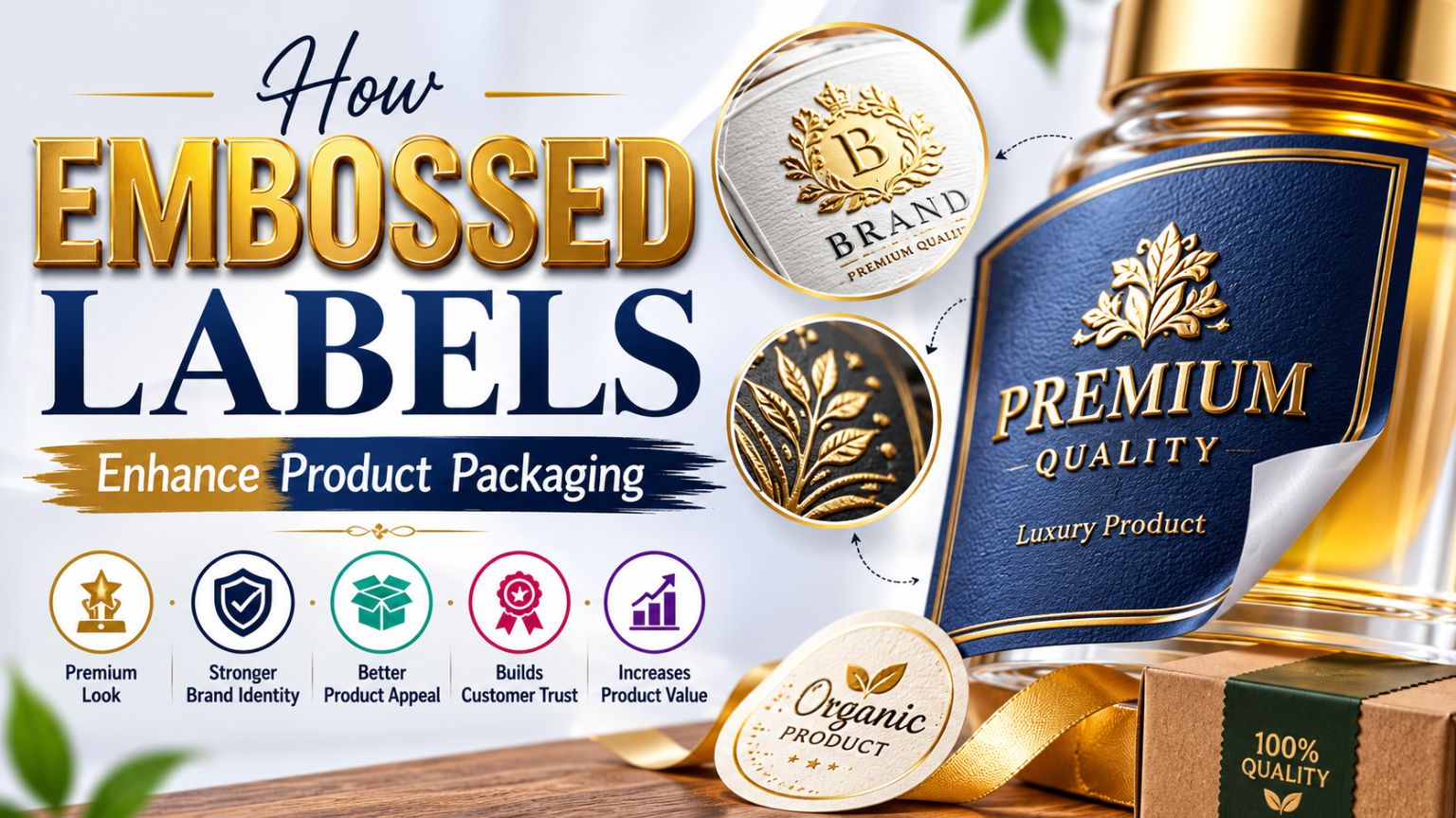
Walk into any retail store and stop at a shelf with competing products. You scan left, then right. Then something makes you reach out and pick one up before the others. It is not always the color or the price. Sometimes it is the feel of the label under your fingertips, the subtle ridge of a logo, the satisfying depth of raised lettering that signals quality before you have read a single word. That is the quiet power of embossed labels, and it is working on consumers every single day without them realizing it.
In a market where shelf space is contested and consumer attention lasts only seconds, packaging is not decoration. It is strategy. And embossing is one of the most effective tools in that strategy, combining visual depth with physical sensation in a way that no flat-printed label can replicate.
What Are Embossed Labels?
At their core, embossed labels are labels that feature raised design elements on their surface. These raised areas can include logos, text, borders, patterns, or any design element that the brand wants to bring to three-dimensional life. The effect is created using custom metal dies that press into the label material under controlled heat and pressure, pushing selected areas upward to create a tactile, raised impression.
The result is a label that does two things simultaneously: it looks different under light because raised surfaces catch and redirect illumination differently than flat ones, and it feels different under touch because your fingertip registers the elevation immediately. Both of these qualities trigger responses in the consumer’s brain that flat printing simply cannot achieve.
The Science Behind Why Touch Sells
Before getting into the types and applications, it is worth understanding why embossing works so consistently across industries. Consumer psychology research consistently shows that tactile interaction with packaging activates brain regions linked to emotion and memory more strongly than visual stimulus alone. When a shopper physically touches a product, they form a subconscious connection with it. That connection increases both product preference and perceived value.
One study from the Journal of Marketing found that packaging that encourages consumers to touch the product increases purchase likelihood. Another body of research from Bocconi University and the University of Innsbruck found that tactile interaction frequently influences consumer choice in visually busy retail environments where everything is competing for attention at once. The implication for brands is clear: if your label invites touch, it is already ahead of one that does not.
Embossed labels are built for exactly this response. The raised texture creates an almost involuntary invitation to touch. A consumer may pick up your product simply to feel what their eye registered, and once they are holding it, your product has a significant advantage over everything still sitting on the shelf.
Types of Embossed Labels
Not all embossed labels look or feel the same. The technique has several variations, each suited to different brand aesthetics and product categories.
| Embossing Type | Description | Best Suited For |
|---|---|---|
| Blind Embossing | Raised design with no added ink or foil, relies on light and shadow | Minimalist luxury, stationery, skincare |
| Foil Embossing | Embossing combined with metallic foil stamping | Premium spirits, cosmetics, gifting |
| Combination Embossing | Embossing paired with full-color printing | Food, beverages, lifestyle products |
| Pattern Embossing | Full-surface textured effect across the label | Candles, home goods, artisan products |
| Spot Embossing | Selective embossing on specific design elements only | Logos, brand marks, taglines |
Blind Embossing
Blind embossing is perhaps the most understated and elegant of the techniques. No additional color or foil is involved. The design is embossed in the same material tone as the label, creating an impression that relies entirely on the interplay of light and shadow to be visible. The effect is deliberately subtle, which makes it the preferred choice for brands that communicate luxury through restraint. High-end skincare products, premium stationery, corporate packaging, and wine labels in the premium tier frequently use blind embossing to suggest sophistication without visual noise.
Foil Embossing
Foil embossing takes the raised design and simultaneously applies a metallic foil, combining depth with reflective brilliance. Gold, silver, rose gold, bronze, and holographic foil options are commonly available. The result is a label that catches light while also inviting touch, creating a dual sensory impact that positions the product as visually premium from across the room and texturally premium up close. Craft spirits, luxury chocolates, high-end candles, and premium cosmetics are strong users of this technique.
Combination and Spot Embossing
These approaches layer embossing with additional printing techniques. Spot embossing targets only specific design elements, such as a logo or a brand name, while leaving the rest of the label flat-printed. This creates hierarchy in the label design, directing the eye and the finger to the most important brand element. Combination embossing integrates full-color printing with selective raised areas, giving brands the flexibility to tell a full visual story while still incorporating the tactile premium of embossed elements.
How Custom Embossed Labels Strengthen Brand Identity
A label does not just identify a product. It communicates the brand’s values, positioning, and promise before any words are read. Custom embossed labels take this communication further by adding a physical layer of meaning that cannot be replicated by digital or mass-market printing.
When a brand invests in embossed labels, it sends a clear message: attention was paid here. Every detail mattered. That kind of signal resonates with consumers who associate craftsmanship with quality, and quality with trust. It is the same principle behind the embossed seal on a legal document or the raised crest on a luxury hotel’s stationery. The physical impression implies authority, care, and permanence.
For product brands, this translates directly into perceived value. A product with a well-executed embossed label will often be perceived as more expensive than its actual price point, which creates a value-for-money impression that strengthens purchase satisfaction. A product that looks like it costs more but is priced accessibly is one of the most powerful positions a brand can occupy on a retail shelf.
Custom embossed labels also allow brands to protect their identity. Embossed designs using unique patterns, proprietary logo shapes, or specific die configurations are significantly harder to counterfeit than flat-printed labels. For brands in premium categories where counterfeiting is a genuine concern, embossing adds a practical layer of authentication that benefits both the brand and the end consumer.
Industries That Rely on Embossed Labels
The versatility of embossed labels means they appear across a wide range of product categories. Understanding where they perform best helps brands assess their own potential to benefit from the technique.
Wine, Spirits, and Beverages
This is historically one of the heaviest users of embossed label techniques. In a category where visual competition on a wine shelf or a back bar is intense, a label that invites touch while projecting premium quality cuts through the noise effectively. Craft breweries, boutique wineries, and premium spirit distilleries use embossing to distinguish small-batch products from mass-market alternatives. The raised texture on a bottle sitting in a wine rack communicates artisanal care without a single additional marketing word.
Cosmetics and Personal Care
Beauty consumers make purchasing decisions with their hands as much as their eyes. A moisturizer with a clean embossed logo on the tube, a perfume bottle with raised floral embossing on its label, or a serum with a tactile brand mark on its cap all speak directly to this consumer behavior. In the beauty category, the packaging is considered part of the product experience, and embossed elements extend that experience to the very first point of contact on the shelf.
Food and Specialty Products
Artisanal food brands, gourmet condiment producers, small-batch honey makers, specialty tea companies, and premium chocolate brands use embossed labels to signal the quality of their ingredients through the quality of their packaging. When the outside of a jar looks handcrafted and deliberate, consumers transfer that perception inward to the product itself.
Candles and Home Fragrance
The home goods and fragrance sector has become a significant adopter of embossed label techniques. A pillar candle with a clean blind-embossed brand mark, or a reed diffuser bottle with foil-embossed labeling, creates a product that fits naturally into the lifestyle aesthetic consumers are building in their homes.
Corporate Gifting, Awards, and Certificates
Embossed seals and labels have a long history in formal documentation, certificates, and awards where they communicate authority and authenticity. The same principle transfers naturally to premium corporate gifting, where packaging is a direct extension of the relationship between the giver and the recipient.
Design Considerations for Effective Embossed Labels
Getting the most out of embossed label printing requires design decisions that account for how the technique behaves with different materials and design structures.
Material selection is foundational. Softer, heavier paper stocks hold embossed impressions more deeply and clearly than thinner materials. Specialty papers, linen-finish stocks, and kraft papers respond well to embossing and contribute their own textural quality to the label’s overall feel. Films and plastic label materials can accept embossing but deliver a sharper, cleaner relief rather than the deeper impression that paper provides.
Design simplicity serves embossing well. Highly detailed, intricate designs with fine lines and small type can lose definition in the embossing process. Bold shapes, clean logos, clear lettering, and defined geometric elements translate most effectively into raised impressions. Designers planning for embossed labels should build with this constraint in mind from the start rather than adapting an existing design after the fact.
Contrast matters. When combining embossing with printing, consider how the raised elements will sit visually against the surrounding printed areas. Spot embossing on a matte background creates strong contrast. Foil embossing on a dark printed base creates striking visual hierarchy. The relationship between the embossed element and the surrounding label surface is where the final impact is made.
Embossed Labels vs. Other Premium Finishes
| Finish Type | Visual Appeal | Tactile Appeal | Cost Level | Best Use |
|---|---|---|---|---|
| Embossed Labels | High | Very High | Medium-High | Premium branding, logos |
| Foil Stamping | Very High | Low-Medium | Medium | Metallic accents |
| Soft Touch Coating | Medium | High | Medium | Cosmetics, wellness |
| Spot UV | High | Medium | Low-Medium | Highlighting elements |
| Matte Lamination | Low-Medium | Low | Low | Clean, minimal look |
Embossed labels hold a strong position in this comparison because they deliver on both the visual and the tactile dimension simultaneously. Foil stamping catches the eye but does not deliver the same physical depth. Soft touch coatings feel premium but lack visual dimension. Spot UV adds shine but no raised texture. Embossing alone covers both channels at once.
What to Look for in an Embossed Label Printing Partner
Choosing a production partner for embossed label work is not the same as standard label printing. The quality of the die creation, the precision of the press registration, and the material knowledge of the production team all directly determine the quality of the final output. A poorly executed emboss can look shallow, misaligned, or inconsistent across a print run, which defeats the entire purpose of choosing a premium technique.
Look for a partner who creates dies in-house or works with trusted die makers, who can provide physical proofs before a full production run is approved, and who has clear experience across the label material types relevant to your product category. Ask to see samples across different stock types, and assess the depth, sharpness, and consistency of the impression before committing to a full order.
Aartstroke brings that level of technical attention to every embossed label project. With deep knowledge of materials, finishing techniques, and print processes, the team works with brands to design and produce labels that deliver the tactile and visual quality that premium positioning demands.
Frequently Asked Questions
Q1. What are embossed labels?
Embossed labels are labels that feature raised designs, text, or patterns created through a specialized printing process. This three-dimensional effect adds texture and visual appeal, making product packaging more distinctive and professional.
Q2. How do embossed labels improve product packaging?
Embossed labels enhance packaging by adding depth, sophistication, and a premium feel. They help products stand out on crowded shelves, attract customer attention, and reinforce brand identity through a high-quality presentation.
Q3. Are embossed labels suitable for all types of products?
Yes, embossed labels can be used across various industries, including cosmetics, food and beverage, wine and spirits, health products, and luxury goods. The design can be customized to match different packaging styles and brand requirements.
Q4. Do embossed labels increase packaging costs?
Embossed labels may cost slightly more than standard labels due to the specialized production process. However, many businesses consider the investment worthwhile because the enhanced appearance can improve perceived product value and customer engagement.
Q5. Can embossed labels be combined with other printing techniques?
Absolutely. Embossed labels can be paired with techniques such as foil stamping, spot UV coating, debossing, and custom finishes to create a unique and eye-catching packaging design that strengthens brand recognition.