In any workplace, warehouse, manufacturing unit or even a household product, there is one small element that silently saves lives every single day, the warning label. Often overlooked, these compact pieces of printed information are among the most critical components of product safety, regulatory compliance and risk management across virtually every industry in the world.
At Aart Stroke, we design and produce high-quality warning label printing for businesses of all sizes, from small product manufacturers to large industrial facilities. In this guide, we walk you through everything you need to know about warning labels, with a particular focus on flammable warning labels and warning flammable labels, some of the most important safety labels used in industry today.
A warning label is a printed notice affixed to a product, container, piece of equipment or location to alert users, handlers and bystanders about potential hazards associated with that item or area. They are not decorative; they are functional, legally required in most industries and directly linked to human safety. Warning labels communicate danger quickly and clearly, often using a combination of universally recognized symbols, bold colors and concise text. The goal is to convey critical information in a fraction of a second, even to someone who may not speak the local language or have prior knowledge of the hazard in question. A well-designed warning label does not require explanation; it speaks immediately and unmistakably.
Warning labels come in many forms depending on the nature of the hazard they communicate. The most common categories include chemical hazard labels, electrical hazard labels, biological hazard labels, radiation warning labels and among the most widely used of all flammable warning labels.
Each type follows internationally standardized formats defined by systems such as the Globally Harmonized System of Classification and Labelling of Chemicals (GHS), which establishes consistent pictograms, signal words and hazard statements used across more than 65 countries worldwide. This standardization ensures that a warning label printing in one country is understood by workers and consumers in another, which is particularly important in global supply chains.
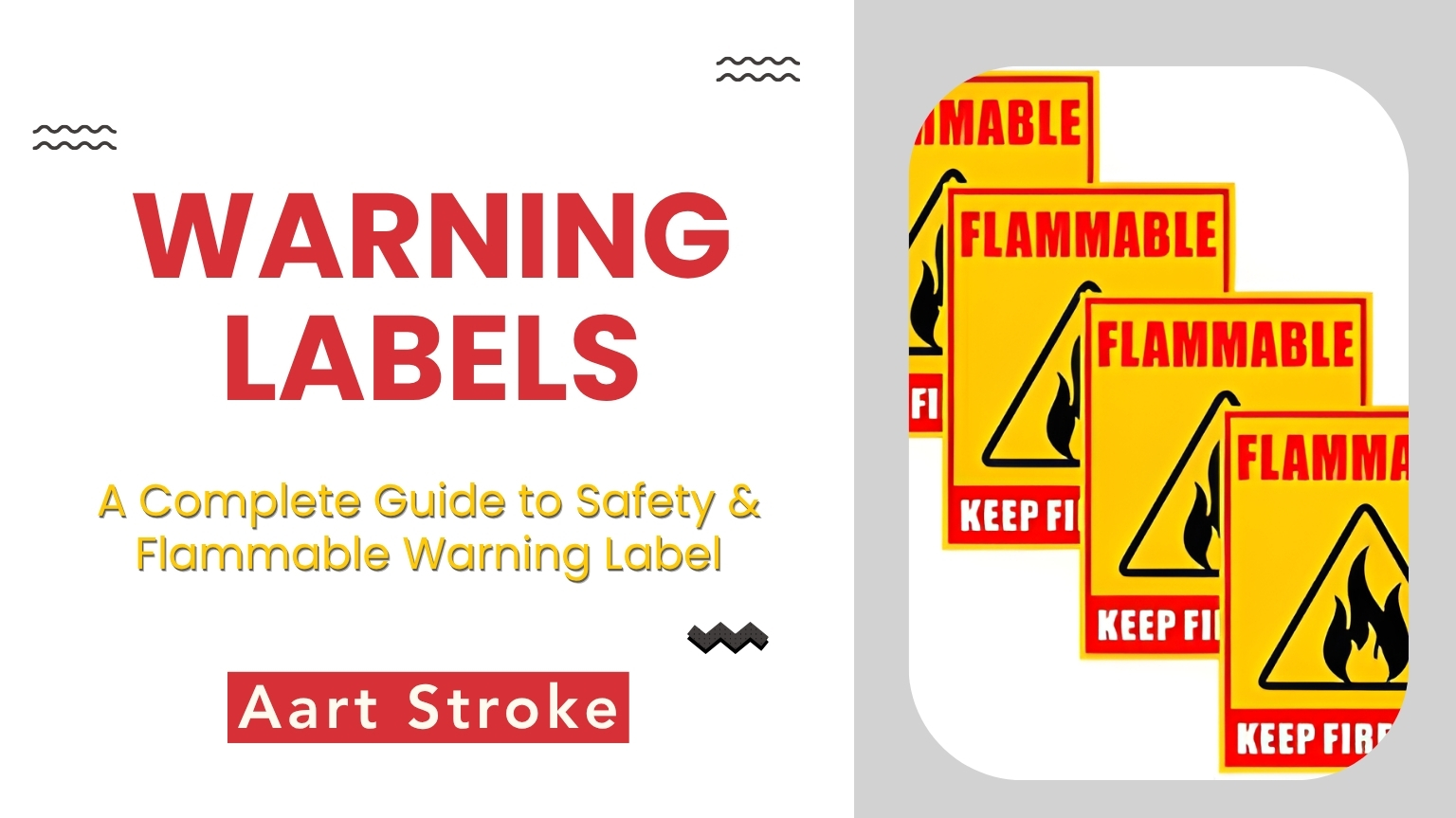
Among all categories of warning labels, flammable warning labels carry some of the highest stakes. Fire and explosion are among the most immediately life-threatening hazards in any environment, and the failure to clearly mark flammable materials is one of the leading contributing factors in workplace fires and chemical accidents worldwide. A warning flammable label printing is specifically designed to identify substances, products, or storage areas that present a fire or explosion risk. These labels are required on a vast range of materials, including petroleum products, solvents, aerosol sprays, adhesives, paints, cleaning agents, compressed gases, and many raw materials used in manufacturing and construction.
The standard flammable warning label features a flame pictogram, a bold, immediately recognizable symbol that conveys fire risk without the need for text. In GHS-compliant labeling systems, flammable substances are classified based on their flash point and boiling point, and the label design reflects the specific level of risk associated with each category. Signal words such as “Danger” or “Warning” are used to distinguish between higher and lower levels of flammability risk, respectively. Warning flammable labels must also include the specific hazard statement relevant to the substance, for example, “Extremely flammable liquid and vapor” or “Flammable liquid and vapor”, along with precautionary statements advising handlers on safe storage, handling, and emergency response procedures. This comprehensive approach ensures that anyone who encounters the labeled product has access to all the information they need to handle it safely.
A warning label is only effective if it communicates its message clearly and instantly. The design of a warning label is therefore not a matter of aesthetics, it is a matter of safety science and regulatory compliance combined. Color plays a central role. Flammable warning labels and other high-risk labels typically use red, orange or yellow backgrounds because these colors are psychologically associated with danger and are highly visible even in low-light conditions or from a distance. The contrast between the background color and the text or symbol is carefully calibrated to maximize legibility.
The need for warning labels spans virtually every sector of the modern economy. In the chemical and petrochemical industry, flammable warning labels and other GHS-compliant hazard labels are legally mandatory on every container of hazardous substances. In the construction industry, warning labels are required on power tools, heavy machinery, structural materials and site hazard zones. In the food and beverage industry, allergy and safety warning labels protect consumers with specific health conditions. In pharmaceuticals, warning labels ensure that medications are used correctly and that dangerous drug interactions or contraindications are clearly communicated.
At Aart Stroke, we understand that warning labels are not a commodity; they are a critical safety tool and a legal obligation. Our team combines deep knowledge of international labeling standards with high-quality printing capabilities to produce warning labels and flammable warning labels that are accurate, durable, compliant and clearly legible under real-world conditions. We work closely with each client to understand their specific regulatory requirements, the environments in which their labels will be used and the substrates and adhesives best suited to their application. Every warning, flammable label and safety label we produce goes through rigorous quality checks before dispatch, giving you complete confidence that your products and facilities meet the highest standards of safety communication.
Ans. Warning labels are safety signs used to alert people about possible dangers. They are important because they help prevent accidents, provide safety instructions, and ensure compliance with safety rules.
Ans. Common materials include vinyl, polyester, and laminated paper. These materials are durable and resistant to water, heat, chemicals, and outdoor conditions.
Ans. Flammable warning labels are used to indicate substances or areas that can easily catch fire, such as fuel containers, gas cylinders, and chemical storage areas.
Ans. It should include a flame symbol, signal words like “Danger” or “Warning,” a clear description of the hazard, and safety precautions to follow.
Ans. Yes, warning labels can be customized based on size, design, color, language, and material to meet specific safety requirements and industry standards.
