
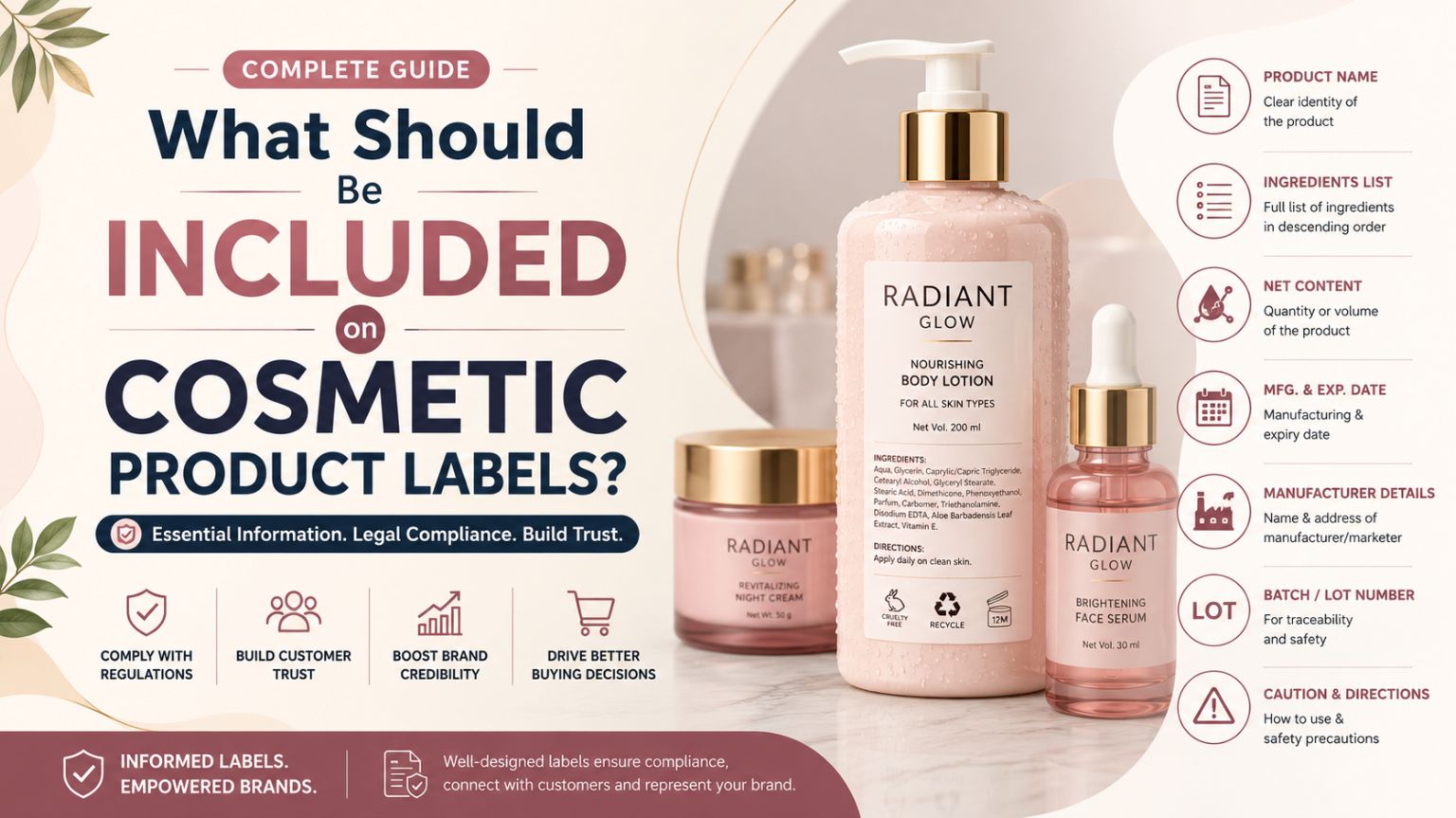
When a customer picks up a beauty product from a shelf, the first thing they interact with is the label. Before they smell it, open it, or try it, they read it. A cosmetic product label is not just a branding tool; it is a legal document, a trust signal, and a consumer guide all at once.
Whether you are a new indie beauty brand or an established manufacturer, understanding what goes on your label is non-negotiable. Regulatory bodies like the U.S. Food and Drug Administration (FDA), the EU Cosmetics Regulation, and other global authorities have laid out strict guidelines for cosmetic labeling. Missing even one element can lead to product recalls, fines, or damage to your brand’s reputation.
Why Cosmetic Labels Matter More Than You Think
A well-designed label does three things: it keeps you legally compliant, it builds consumer confidence, and it clearly communicates what your product is and how to use it. Customers today are more ingredient-conscious than ever. They flip bottles, Google INCI names, and read expiry dates before purchasing. If your skin care product label is vague, cluttered, or missing key information, you lose the sale and possibly the customer forever.
1. Product Identity / Product Name
The very first thing your label must communicate is what the product actually is. This means clearly stating the product name and its function — for example, “Moisturizing Face Cream,” “Clarifying Shampoo,” or “Volumizing Mascara.” The product identity should appear on the Principal Display Panel (PDP), which is the front-facing portion of the packaging that consumers see first in a retail setting. It should be bold, legible, and sized prominently enough to catch the eye without any confusion about the product’s purpose.
2. Full Ingredient List (INCI Names)
This is arguably the most critical section on any cosmetic product label. Every ingredient used in the formulation must be listed in descending order of concentration, meaning the ingredient present in the highest amount appears first, and the least concentrated one appears last. Ingredients that make up less than 1% of the formula can be listed in any order, but they must still appear on the label. All ingredient names must follow the International Nomenclature of Cosmetic Ingredients (INCI) system, which is a globally standardized naming convention. For botanical ingredients, it is good practice to include both the Latin name and the common name — for example, “Rosmarinus Officinalis (Rosemary) Leaf Extract.”
3. Net Quantity of Contents
Your label must clearly state how much product is inside the packaging. This should be expressed in both metric units (grams or milliliters) and the standard units used in your country (ounces or fluid ounces in the US). Accurate net quantity labeling ensures consumers know what they are paying for and helps them compare products across brands fairly.
4. Manufacturer, Distributor, or Responsible Party Information
Every cosmetic product must include the name and principal place of business of the manufacturer, packer, or distributor. This is the “responsible person” in legal terms, the entity accountable for the product’s safety and compliance.
This information typically includes:
- Full legal name of the company
- Street address, city, state, and zip/postal code
- Country of origin (if applicable for imported products)
Some brands also add a customer service phone number or website URL to make it easier for consumers to reach them, which is a great trust-building move beyond what is legally required.
5. Directions for Use
How should the product be applied? How often? Should it be rinsed off or left on? These are questions customers ask, and your label should answer them clearly. Usage instructions are especially important for products like sunscreens, chemical exfoliants, hair dyes, and treatments where incorrect use could lead to skin irritation or ineffective results. Clear, simple directions also reduce the chance of customers misusing the product and experiencing adverse reactions, which protects both them and your brand.
6. Safety Warnings and Precautionary Statements
Not every cosmetic product needs a warning, but many do. Regulatory guidelines require that products include appropriate caution statements depending on their formulation and intended use.
Common mandatory warnings include:
- “Keep out of reach of children” — required on most cosmetic products
- “For external use only” — for products that could be mistaken for something ingestible
- “Avoid contact with eyes” — for products applied near the eye area
- “Do a patch test before use” — especially recommended for hair dyes and strong active ingredients
- Aerosol products must carry pressure and flammability warnings
These cosmetic safety warnings are not optional. They are there to protect the consumer and protect the brand from liability.
7. Batch Number / Lot Number
A batch number or lot number helps manufacturers track a specific production run. While it may not seem important to the average consumer, it is critical for quality control and product recalls. If a safety issue arises with a specific batch, a lot number allows the brand to quickly identify affected products, pull them from shelves, and notify customers. It is also used by dermatologists and regulatory authorities when investigating adverse reactions.
8. Best Before / Expiry Date or PAO Symbol
Cosmetics do not always carry a traditional expiry date, but they do degrade over time. Two types of dating are commonly used: The “Best Before” or “Use By” date tells the consumer the date by which the product is safe and effective when stored correctly. The Period After Opening (PAO) symbol, which looks like an open jar with a number inside, tells the consumer how many months the product can be safely used after opening.
9. Country of Origin
If a product is imported or manufactured in a different country from where it is being sold, the country of origin must typically be stated on the label. This is required under customs and trade regulations in most countries and helps consumers make informed purchasing decisions.
10. Claims and Certifications
Many brands today include claims such as “Cruelty-Free,” “Vegan,” “Dermatologist Tested,” “Hypoallergenic,” or “Certified Organic.” While these are not always legally required, if you make these claims, they must be truthful and substantiated. Certifications from recognized third-party bodies (like Leaping Bunny for cruelty-free, or COSMOS for organic) carry more credibility than self-declared claims. As sustainability and ethical sourcing become bigger consumer priorities, verified certifications on your cosmetic product packaging can be a strong differentiator.
11. Fragrance and Allergen Disclosures
Many individuals are sensitive to certain fragrance ingredients. Regulatory bodies, particularly in the EU, require that known allergens present in a fragrance blend be individually listed on the label rather than simply writing “Fragrance” or “Parfum.” Even in markets where fragrance allergen listing is not yet mandatory, proactively disclosing them reflects brand integrity and helps sensitive consumers make safer choices. This trend is growing globally and is expected to become standard practice soon.
Label Placement: PDP vs. Information Panel
Understanding where to place information on a label is just as important as what to include.
The Principal Display Panel (PDP) is the front of the product, the section most visible to the consumer at the point of purchase. It must prominently display the product name, product identity, and net quantity. The Information Panel, usually located on the back or side of the product, is where the ingredient list, manufacturer details, directions for use, and warnings are typically placed.
Common Cosmetic Label Mistakes to Avoid
Even experienced brands make labeling errors. Here are the most common ones:
Using marketing language as ingredient names instead of proper INCI names is a frequent mistake. Writing “Aloe” instead of “Aloe Barbadensis Leaf Juice” does not meet regulatory standards. Leaving out allergens or known sensitizers because they are present in small amounts is another error. Even trace amounts matter in some formulations.
How Cosmetic Labels Affect Your Brand on Aart Stroke
At Aartstroke, where quality meets creativity, getting your cosmetic label right is the foundation of every successful product. Whether you are designing packaging for a private-label brand, launching your own beauty line, or sourcing custom cosmetic packaging, understanding cosmetic label compliance ensures your product is shelf-ready, legally sound, and trusted by the consumer at first glance.
Final Thoughts
A cosmetic product label is far more than a sticker on a bottle. It is a regulatory document, a brand statement, and a consumer promise all rolled into one. From the ingredient list and net quantity to safety warnings and batch numbers, every element on the label serves a purpose. Getting it right the first time saves you from costly reformulations, legal complications, and loss of consumer trust. Whether you are building a new brand or refining an existing product line, invest the time in understanding what belongs on your label and make sure everything is there.
Frequently Asked Questions
Q1. Is it mandatory to list every single ingredient on a cosmetic label?
Yes. All cosmetic products sold at retail must include a complete ingredient list using approved INCI names, listed in descending order of concentration. Ingredients present at less than 1% can be listed in any order but must still be included.
Q2. What is the INCI system and why does it matter?
International Nomenclature of Cosmetic Ingredients is commonly known by its acronym, INCI. It is a globally standardized system for naming cosmetic ingredients. Using INCI names ensures consistency across different countries and helps consumers identify ingredients accurately, regardless of language.
Q3. Do all cosmetics need an expiry date on the label?
Not all cosmetics require a traditional expiry date, but most should include a Period After Opening (PAO) symbol indicating how long the product is safe to use after being opened. Products with a shelf life of 30 months or less typically require a “Best Before” date.
Q4. What happens if my cosmetic label is non-compliant?
Non-compliant labels can result in your product being classified as “misbranded” by the FDA or equivalent regulatory bodies. This can lead to enforcement actions, import detentions, product recalls, financial penalties, and serious damage to your brand reputation.
Q5. Is a barcode required on a cosmetic product label?
A barcode is not legally required by the FDA for cosmetic labeling, but it is practically essential for retail sales and inventory management. Most retailers will require a UPC barcode before agreeing to stock your product.